
Establishing sustainable water management in rural ecosystem
View deliverables
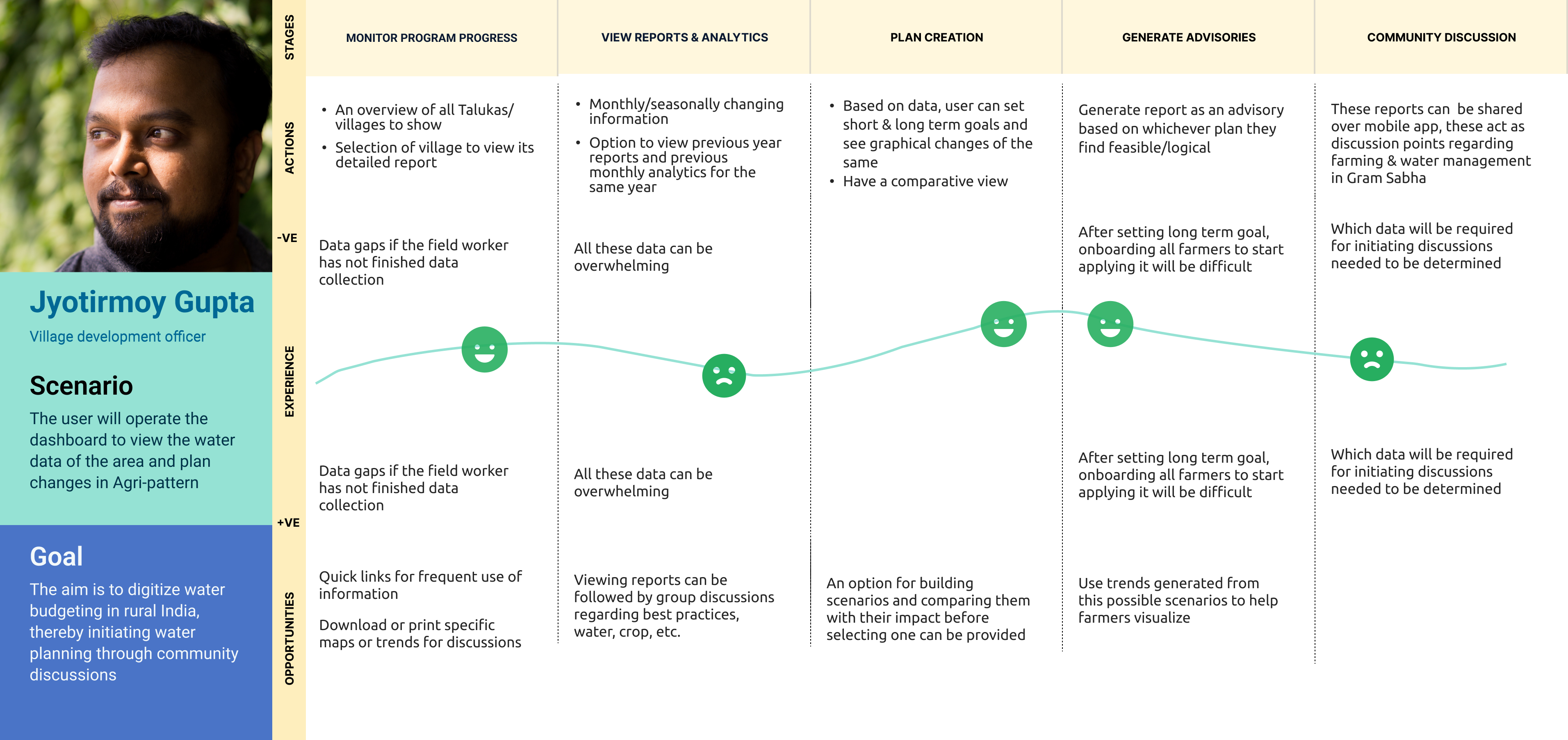
User journey
Role
UX Design
UX research
Time
1.5 months
Tools
Figma, Miro, Trello
Overview
Ekatvam is social startup, being incubated under Digital Impact Square, working in the agri-water sector, with an aim to ensure participatory water management in rural ecosystems.
Context
Water supply and support in rural areas is more challenging due to the settlement locations mostly in environmentally fragile areas. Being an agrarian country, irrigation requires a hooping value of 78% of India’s total water reserve.
The scope of work included streamlining the service around this SAAS platform which requires a data centric approach towards establishing “sustainable water management” in rural ecosystem.
About the project
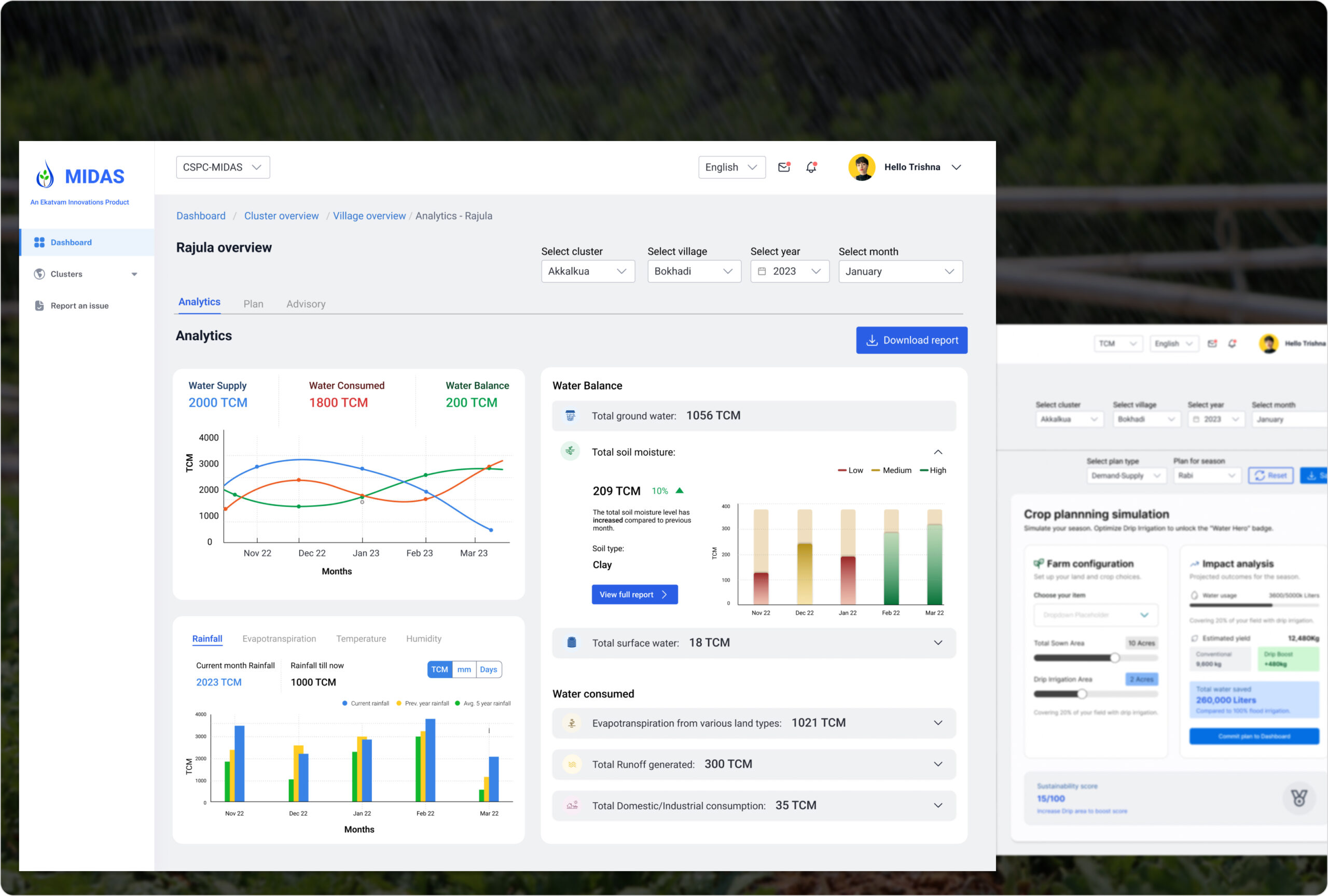
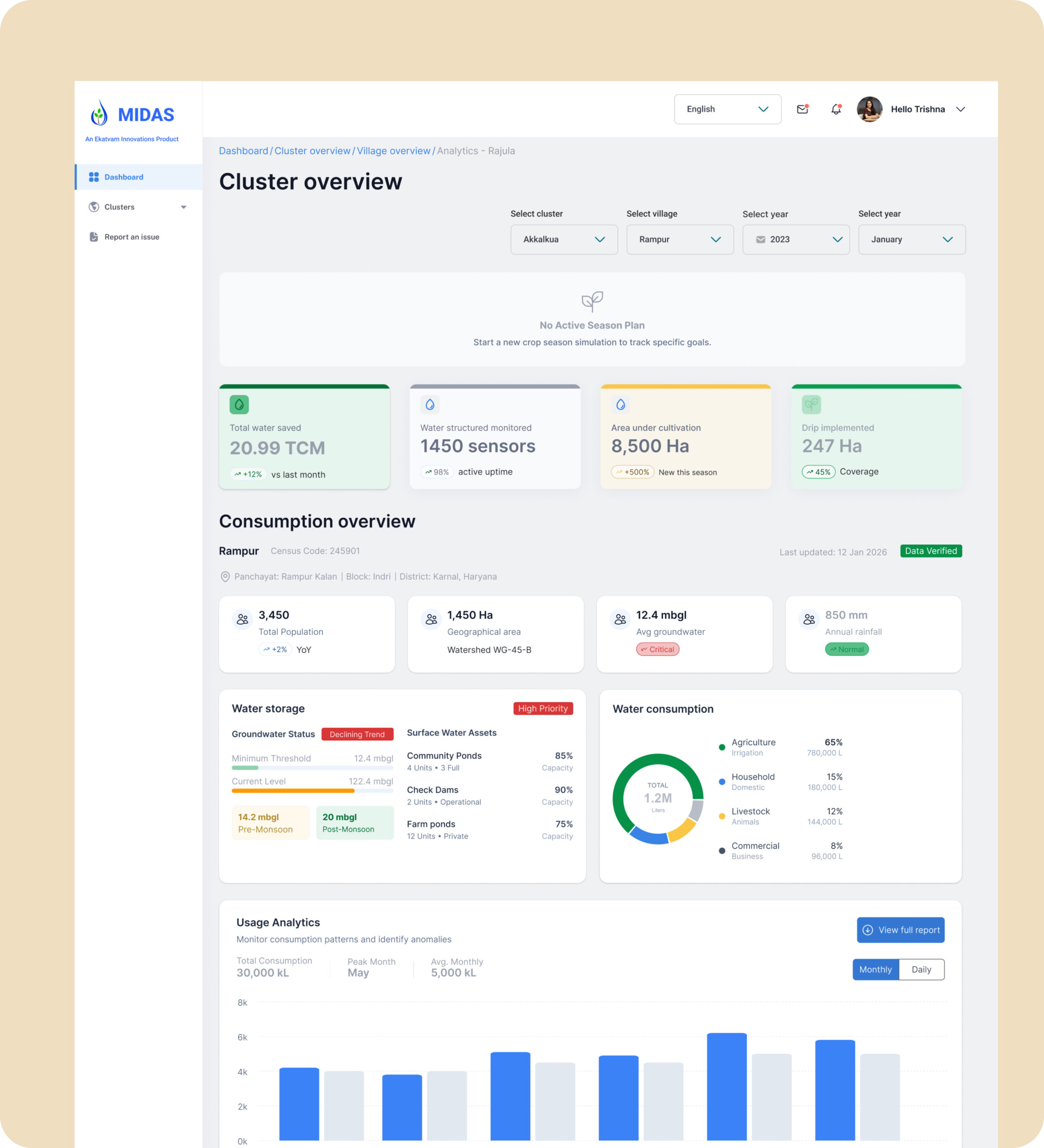
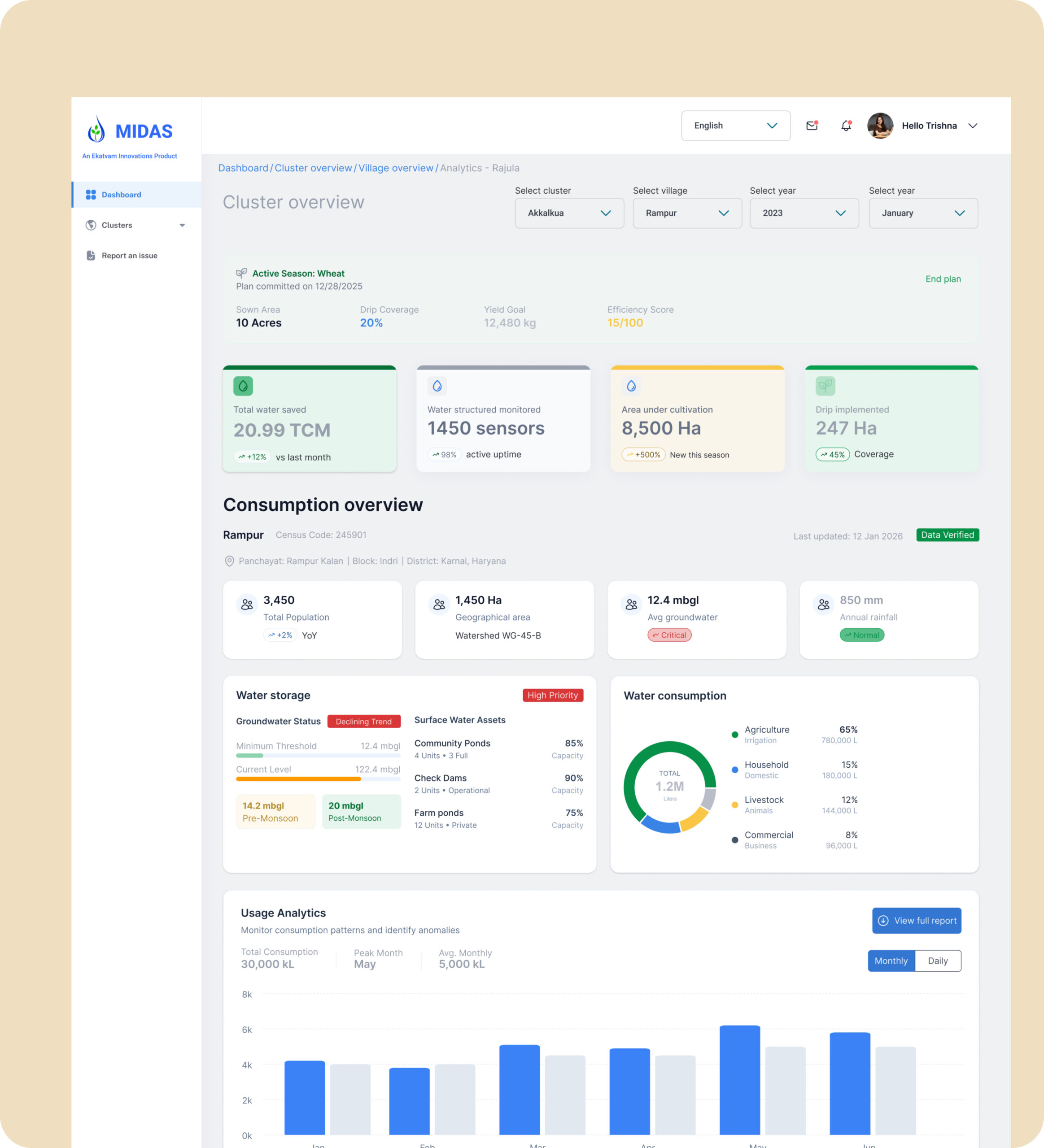
MIDAS (Model of Interactive Decision Assistance Simulator) is a water management web dashboard that allows the authorities to understand the water related conditions of villages. This web based portal consists of different data processing engines which allows a flexibility of it being used and the subsequent service model has been made keeping in mind the challenges faced in this arena.
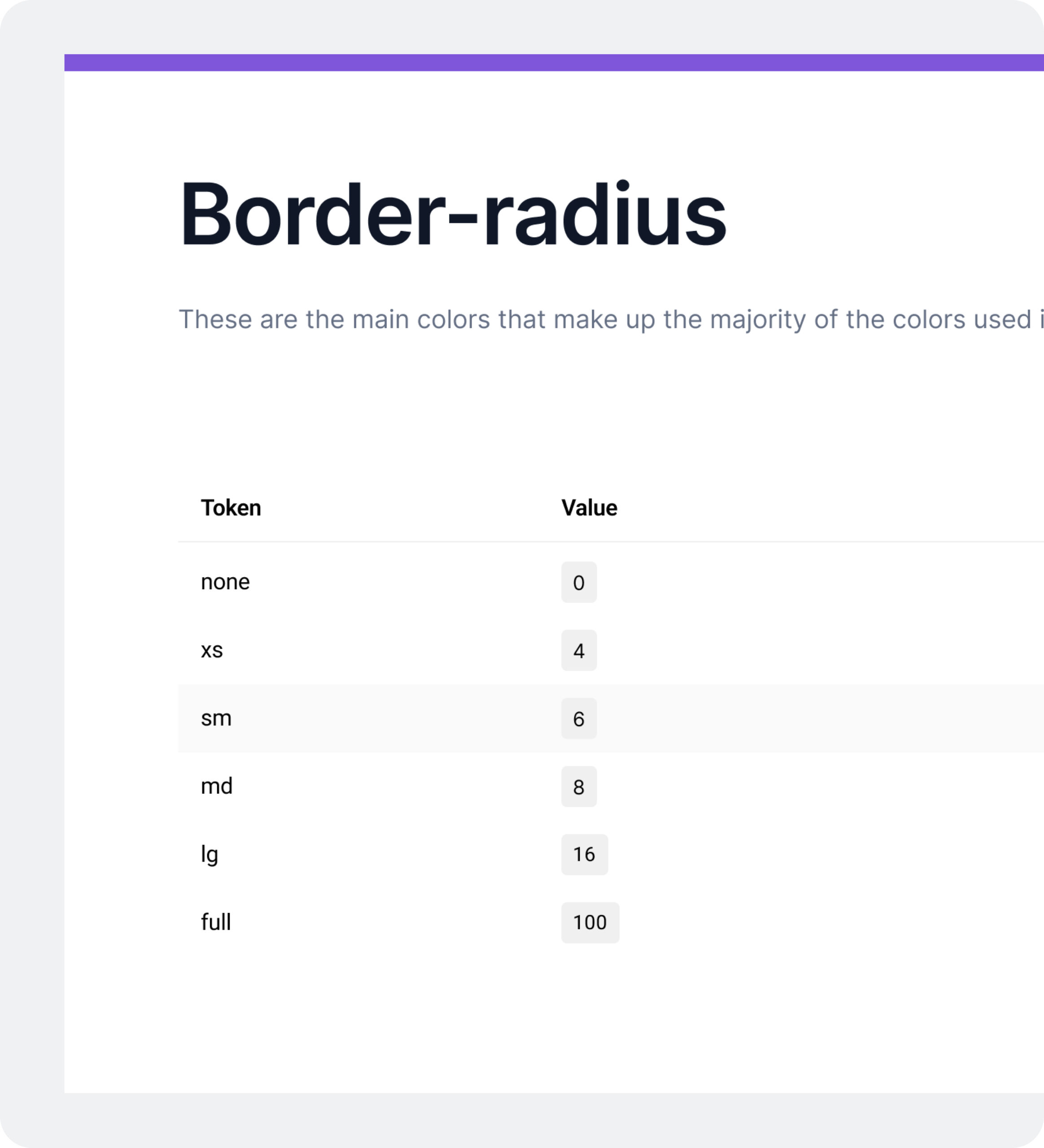
For the MIDAS project I have helped the team with their MVP launch, gamification and developed Design System.
Challenges
In our country INDIA there is an increasing gap between water availability and its demand and is majorly linked to agricultural sector. This gives rise to a dire need to bridge the gap between the two and build resilience in the community and create water sustainability in crisis months. But currently managing water is time consuming, because of various challenges as mentioned below.
No unified platform
Inadequacy of bringing scattered data into single platform
Less water planning
Showing water availability and demand and not engaging the stakeholders to participate and create water security plans
Centralized governance
Information and decision making are highly centralized leaving very little scope for the community to participate and engage in developing water resilience
Solution
Addressing these issues, a technology enabled water governance tool MIDAS (Model of Interactive Decision Assistance Simulator) was developed by Ekatvam.
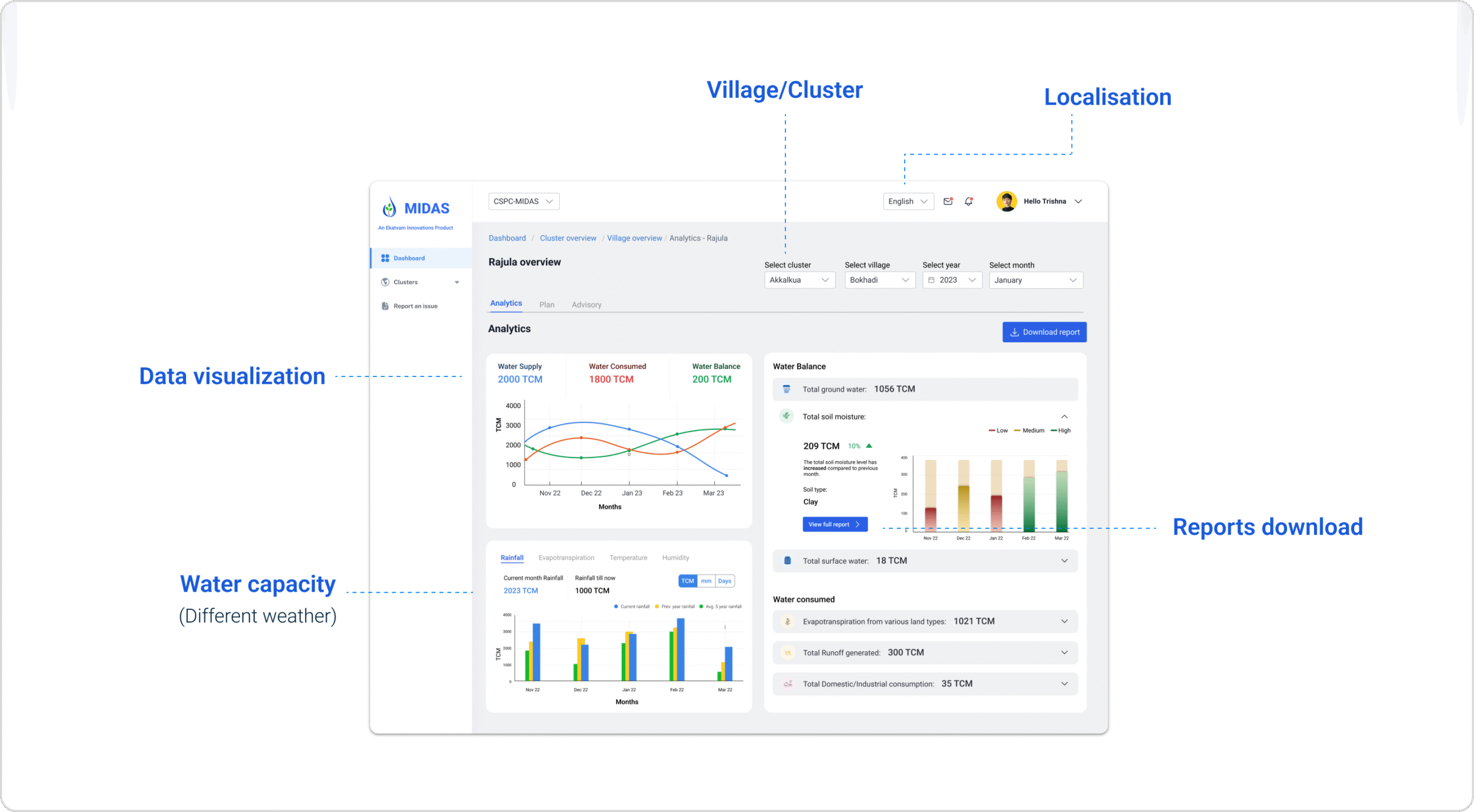
Data visualization
Empowering Gram Panchayat to maintain their own water balance and strengthening their decision making.
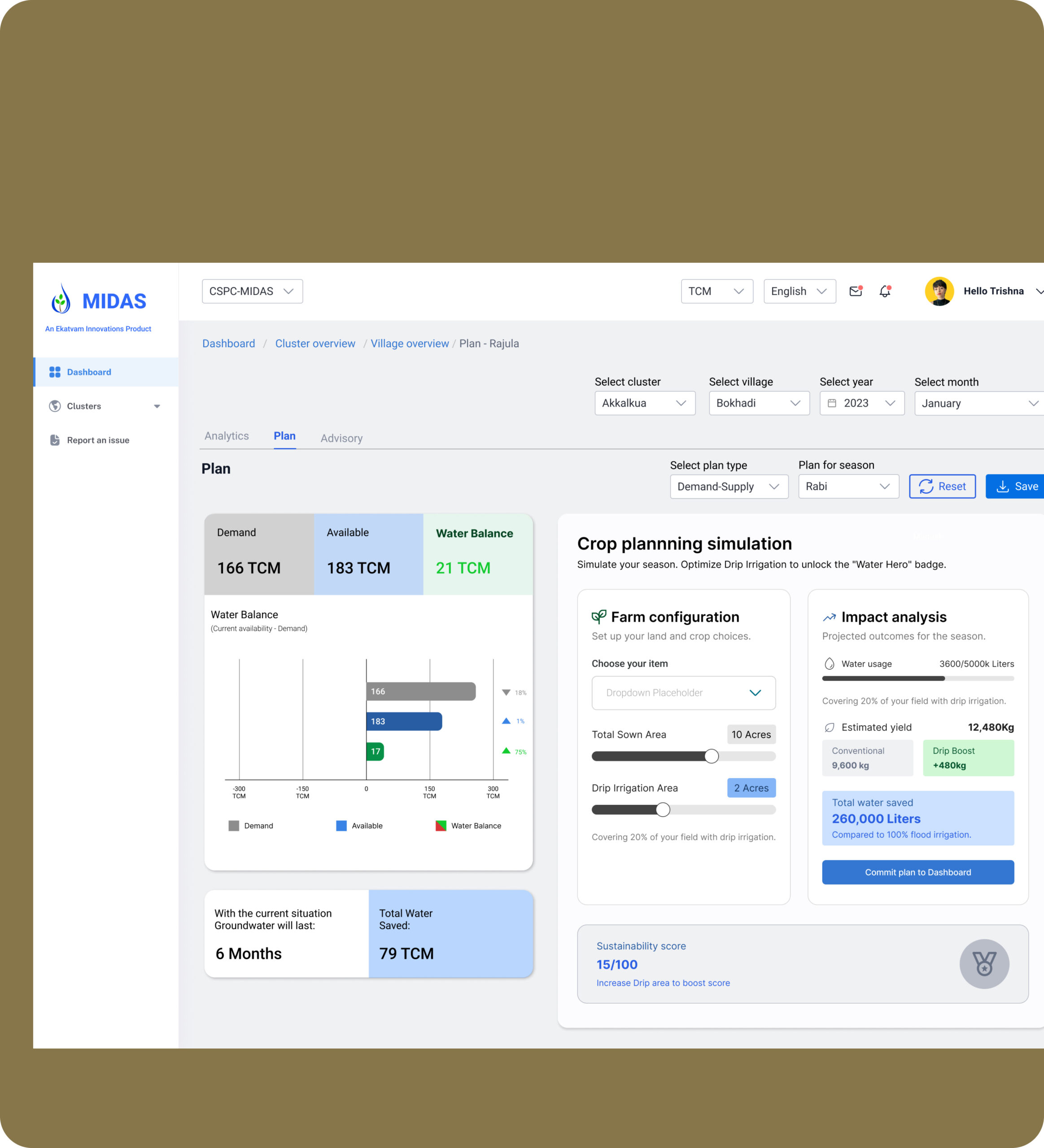
Crop simulation
Clarity and transparency in designing an intervention through a goal and impact oriented roadmap presented to the concerned stakeholder
Water reports
Fast-tracking the effort in enabling community discussion on water
management through different mediums like videos, reports etc.
In this stage, we started with understanding the business context, goals, target audience and constraints. To help the business and understand the problem space better, I started studying the research documents shared from the client, websites of government initiatives in the similar space and went across the competitors website. These studies helped a lot as it was the first point of contact around the topic and provided a baseline to connect with users for validating the insights.
Research
The research phase of this project was quite extensive and dynamic as I had to spent 12 days visiting 8 villages spread across 3 Indian states, talking to over 100 farmers.
Research goals
- To deep dive into user’s challenges and how better we can solve them
- To understand the complete rural landscape with its nuances such as importance of community gathering, identify villagers for implementing advisory and the outlooks towards water management plans.
Research insights
Need for water management
Access to localized data and periodic generation of near real-time water balance for any village
Understanding & empowering community
Clarity and transparency in designing an intervention through a goal and impact oriented roadmap presented to the concerned stakeholder
Role of technology
Fast-tracking the effort in enabling community discussion on water
management through different mediums like videos, reports etc.
Defined two key user groups involved at different levels, module of the product and made a list of some of the probable features we would like to incorporate in the first phase of MIDAS.
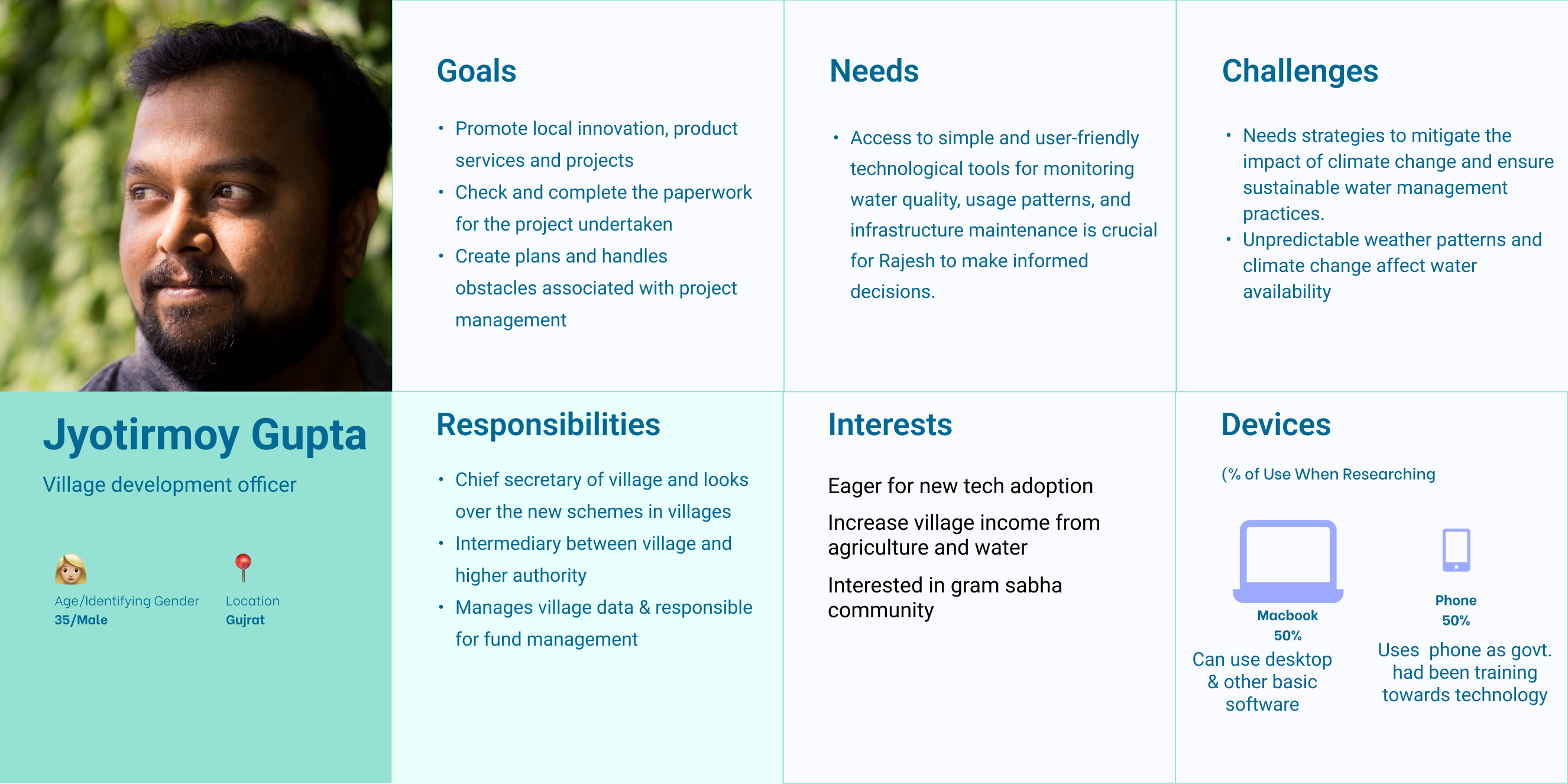
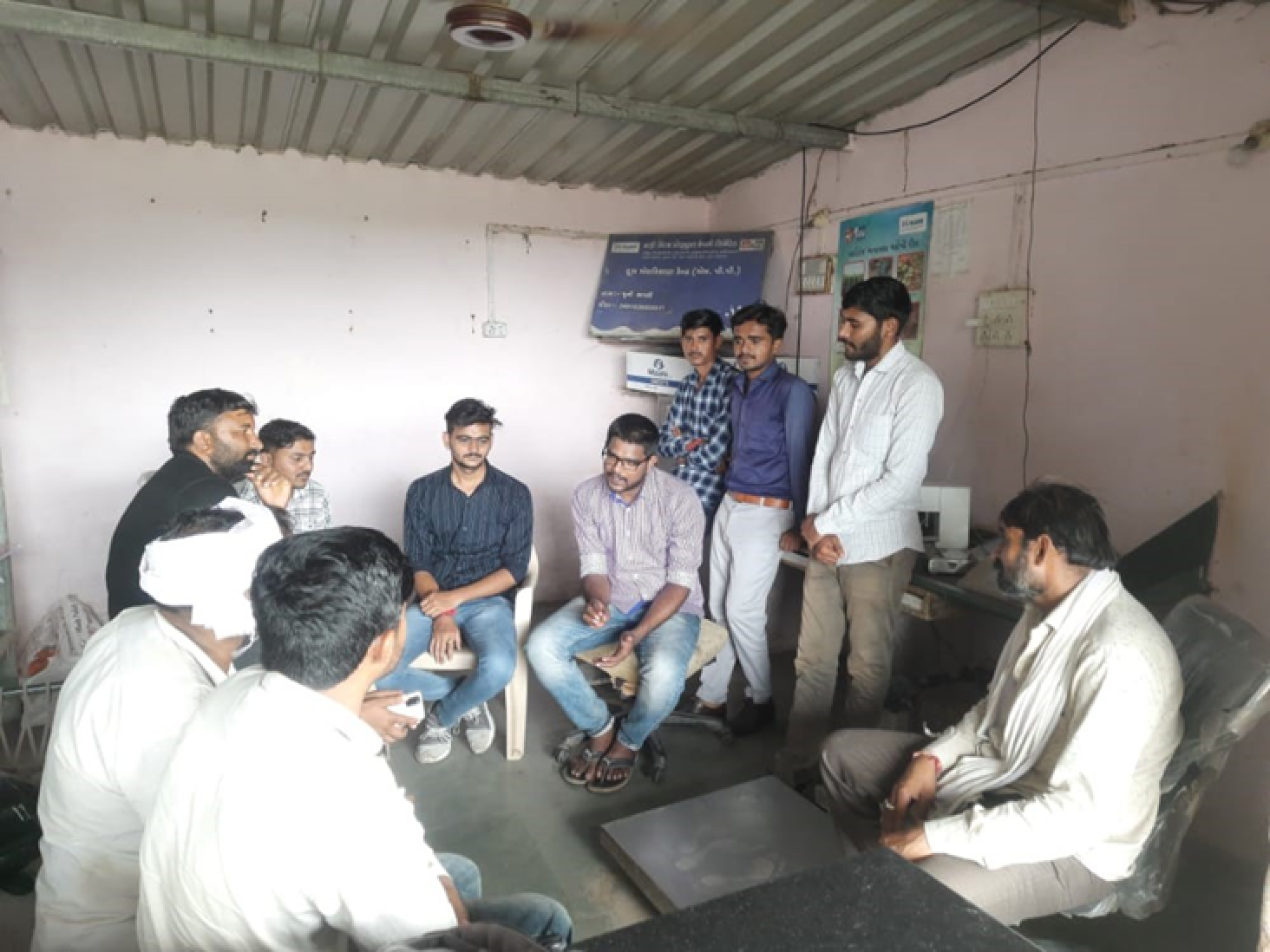
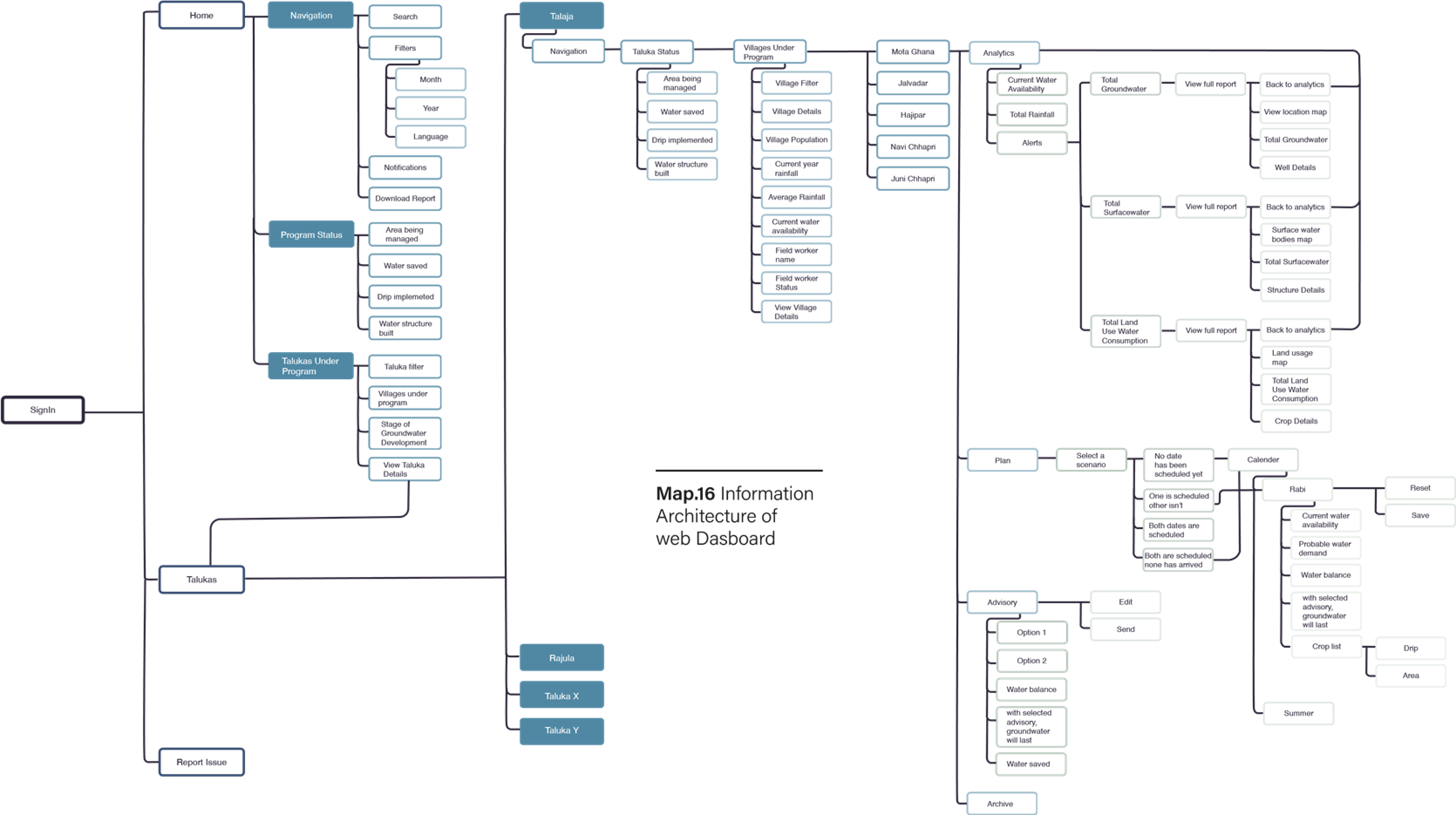
And finally comes the most challenging part of the project was to create the Information architecture. As we had no clear understanding of what and how the information to be presented in UI. To solve this issue we conducted an workshop with Program Managers, Village development officer & Gram panchayat to map out how we can group the data points logically which would be helpful for users to navigate.
There had been multiple iterations in the IA as we got matured with the field operations team getting ideas of what actually needs to be presented in the tool. Initially there have been three categories under which the contents of the dashboard were divided: Home, Reports and Planning
Information architecture
Design
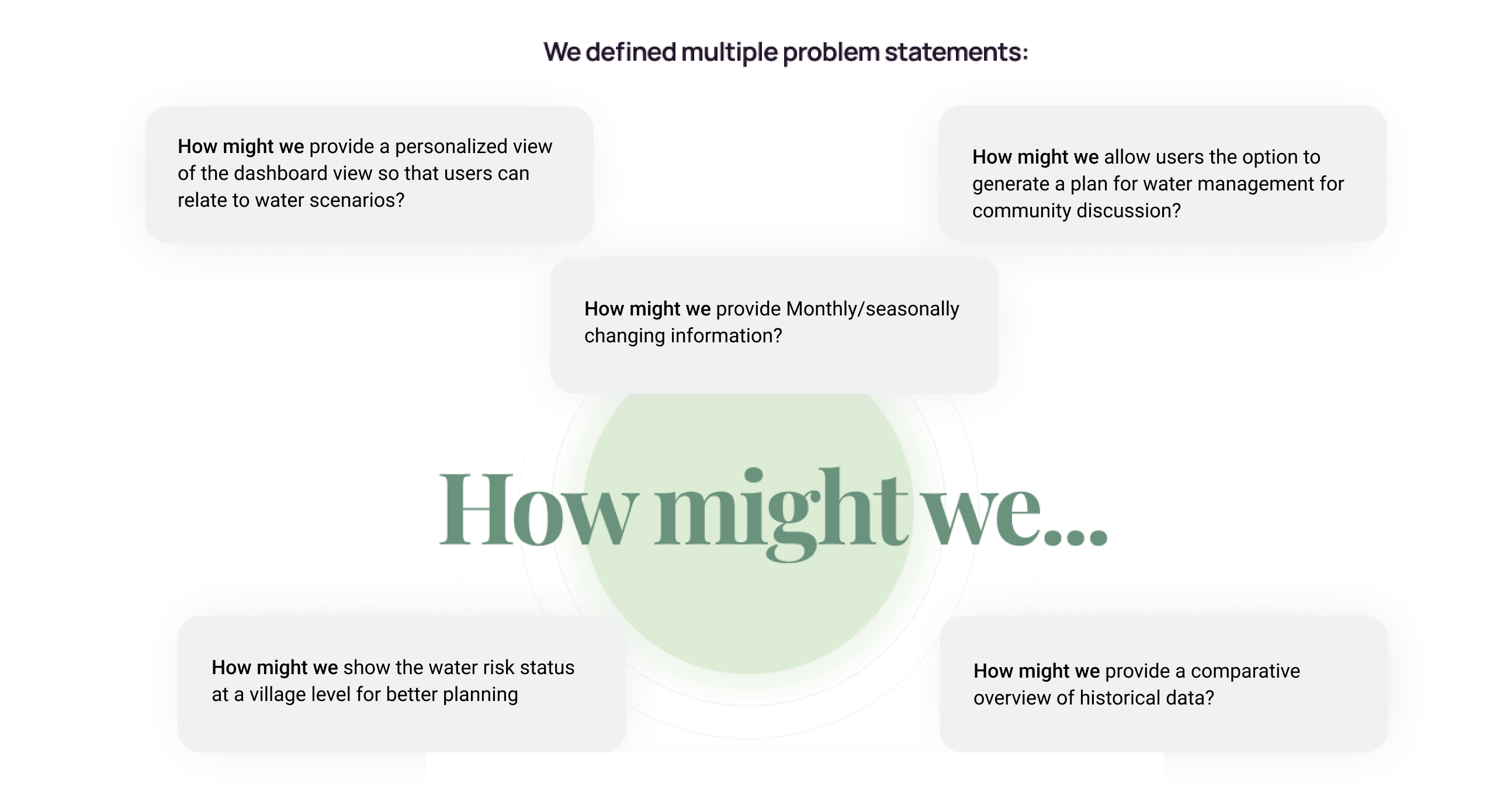
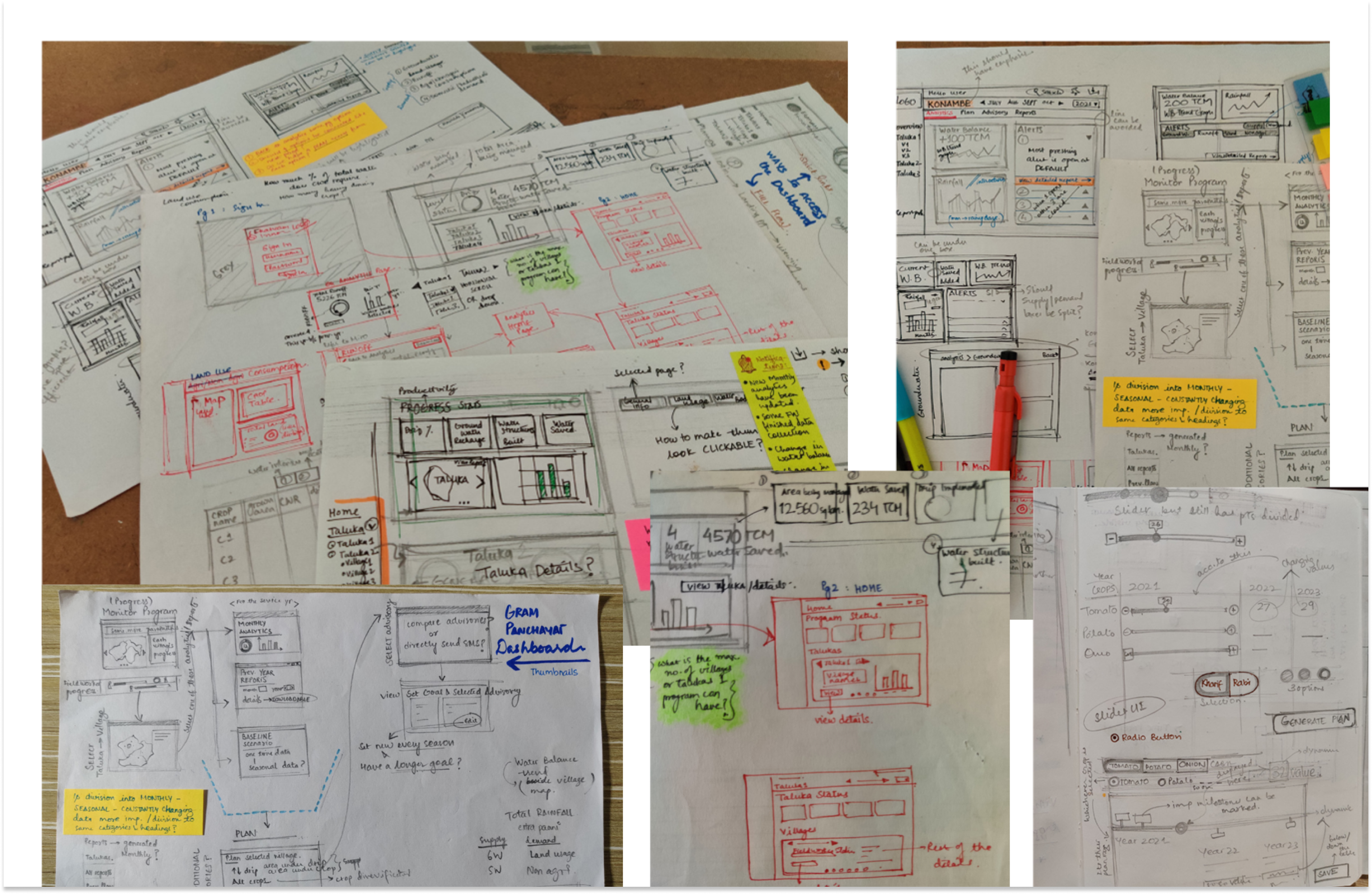
The wireframes were accompanied by initial level validations, trying to figure out content divisions from my notes and detailing out screens and layout to verify with stakeholder and water expert mentors.
First version of the screens

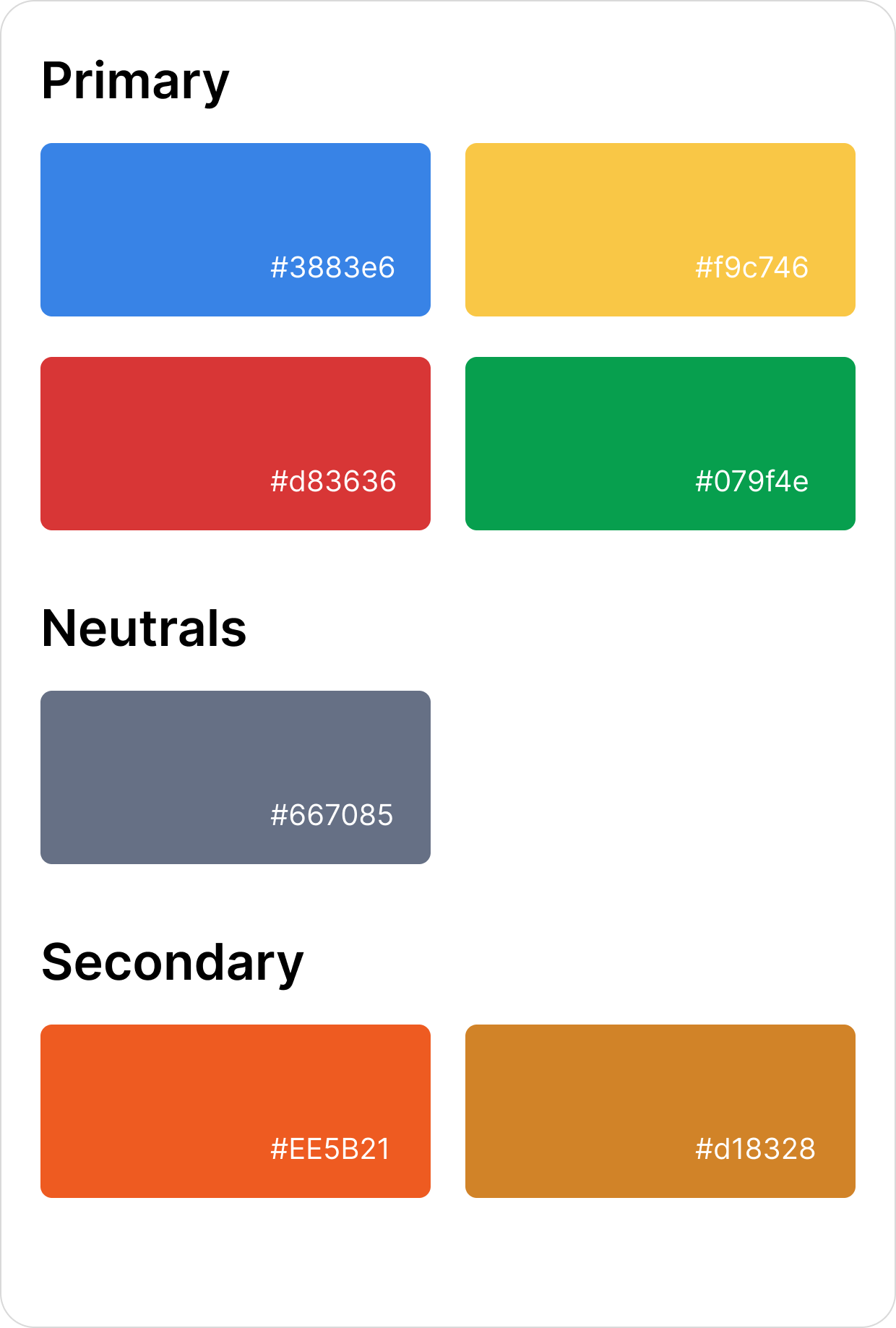
Colors
The color scheme selected was Triadic as the project needed multiple colors to explain different elements in UI. Apart from that there was also a need to establish usable color palettes which could be easily distinguished and displayed properly in large projector screens in village.
Typography
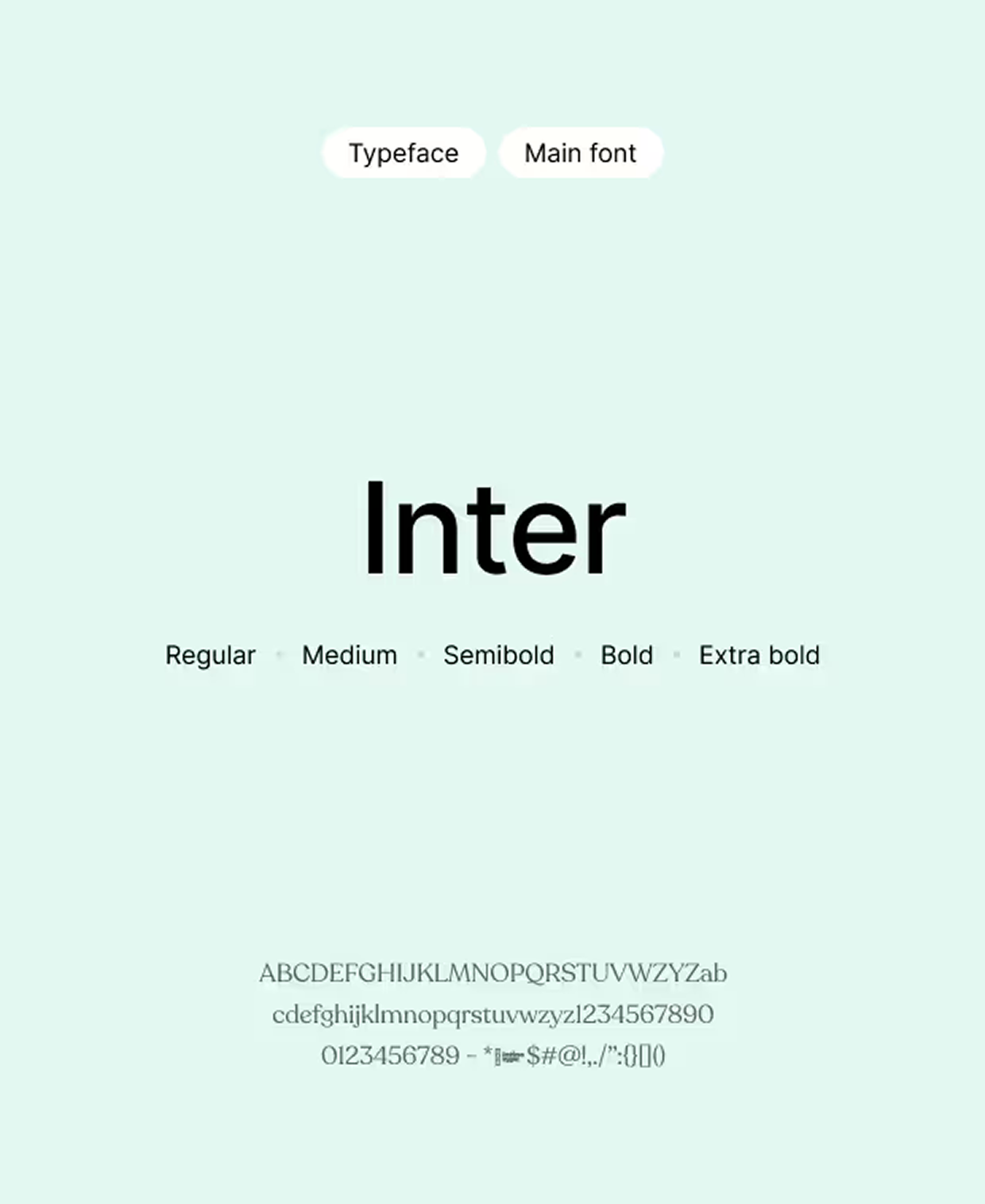
When it comes to rual projects, based on the research Inter was one of the popular choice due to its multiple variant types and accessible with different regional languages.
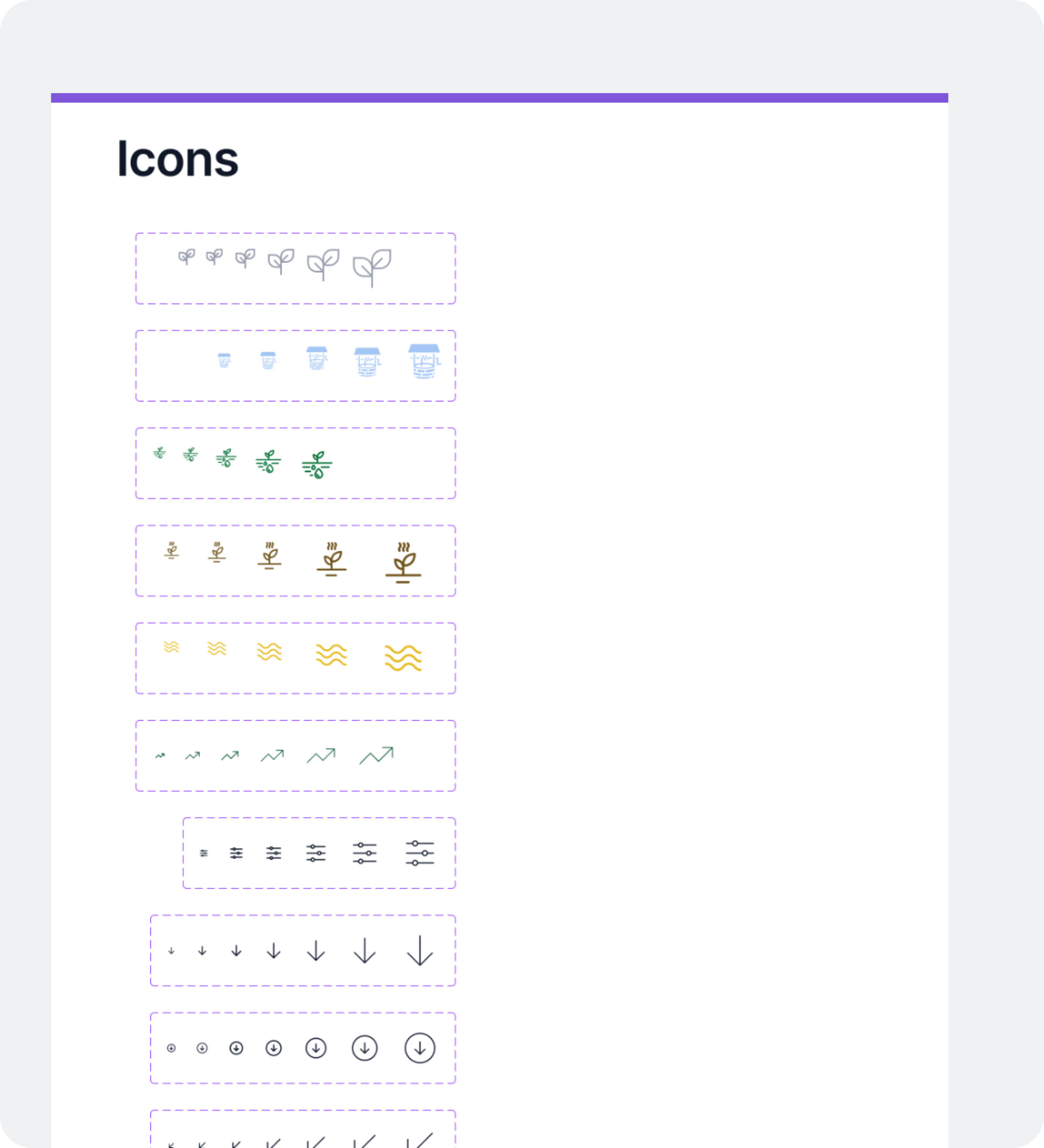
Iconography
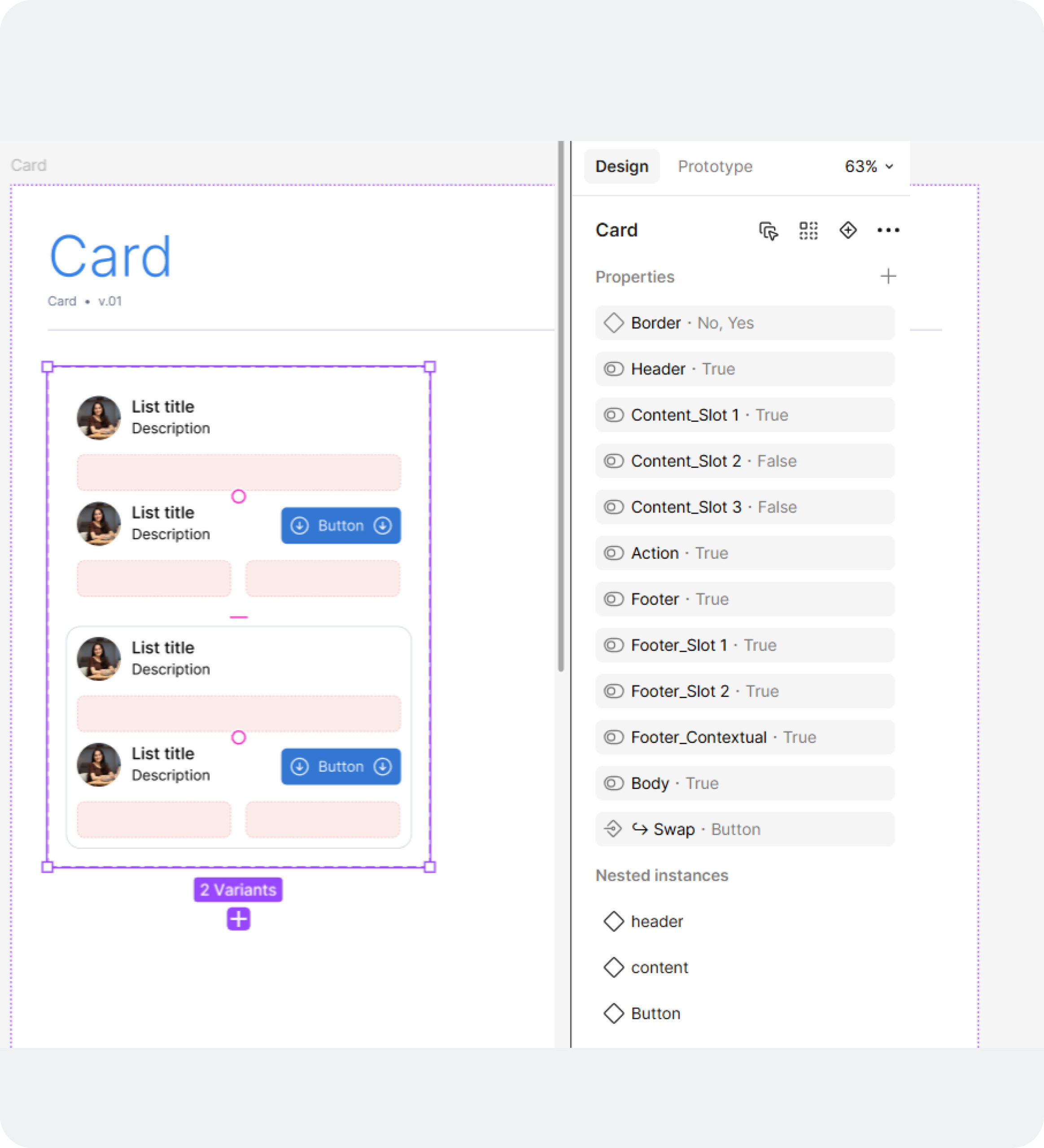
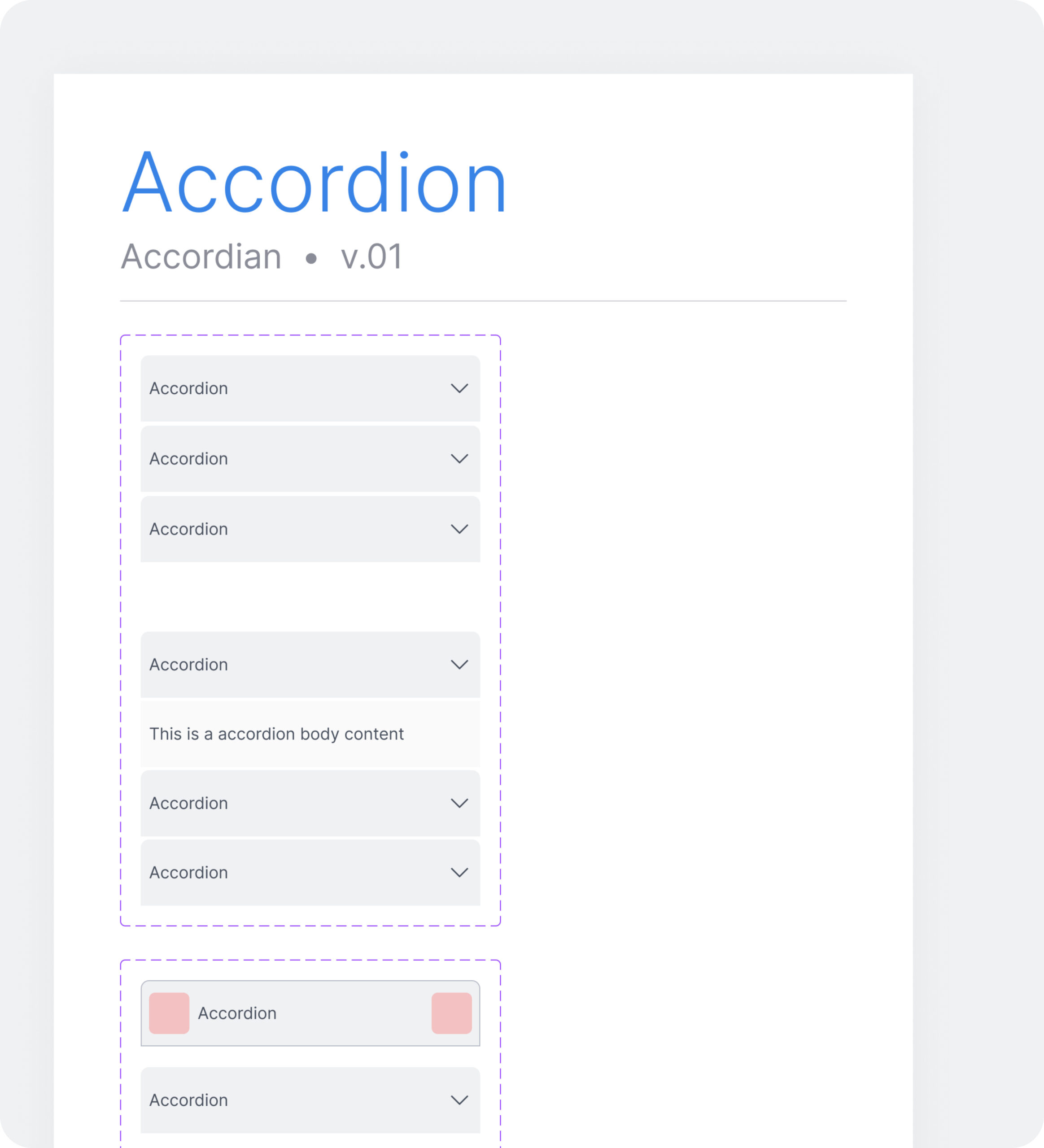
Components
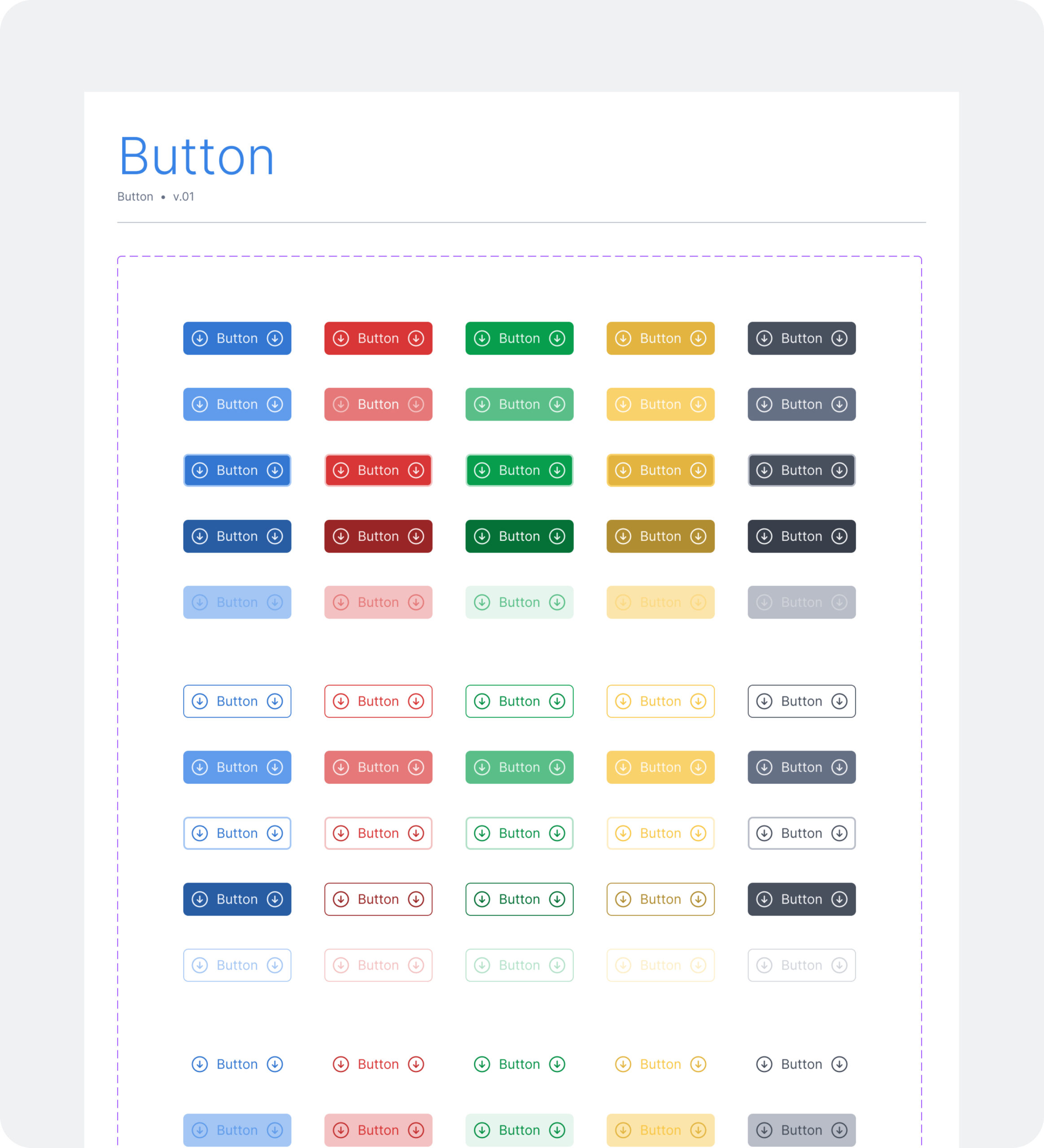
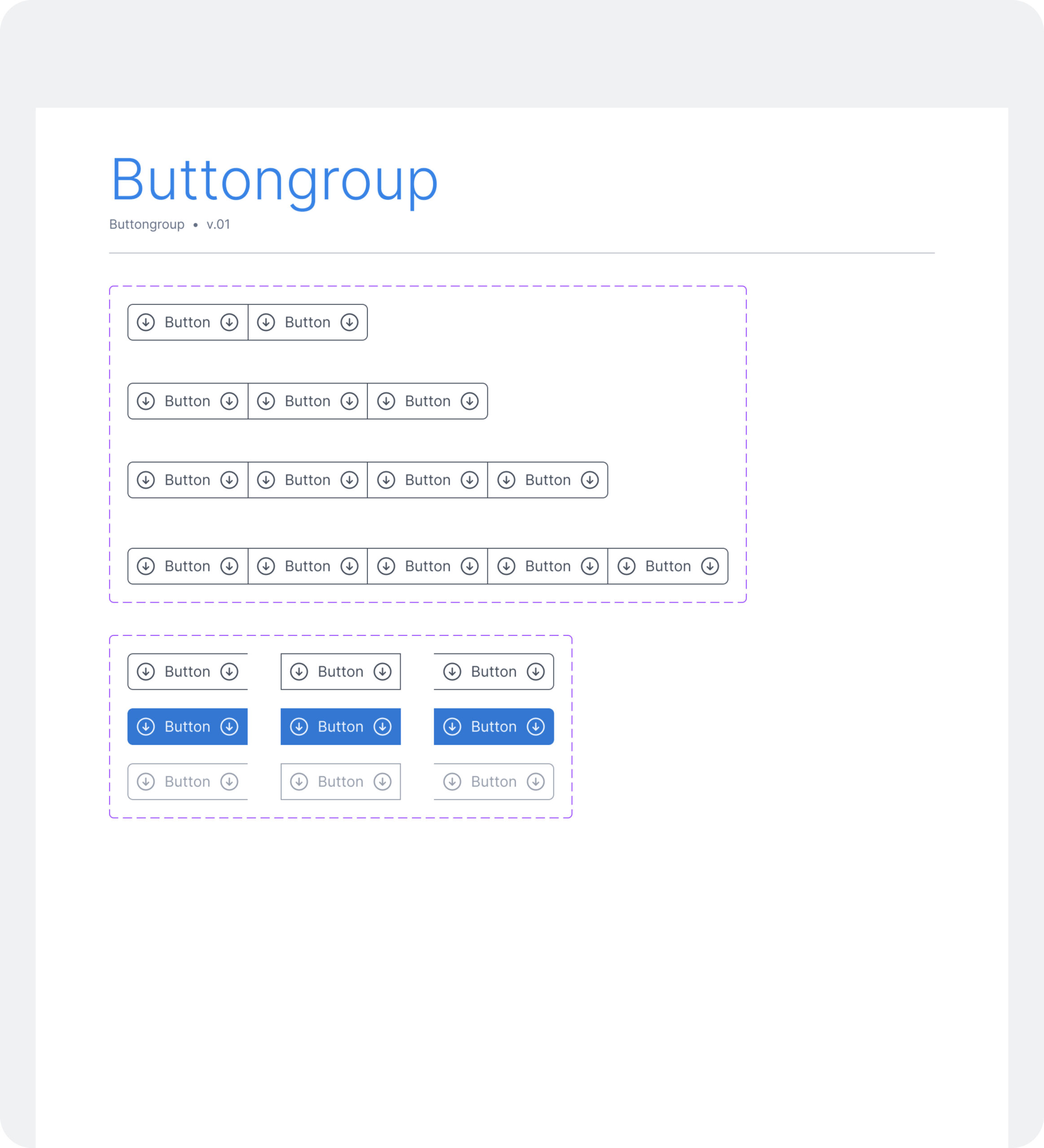
Visuals
Visuals
Business impact
- 20% more water saving with community meetings quarterly
- More than 20+ water plan creation monthly
- 10+ new villages onboarded per quarter
Learnings
- Got exposure to learn and explore new domain of working with rural projects
- No defined processes, so the scope to explore was vast
- Driving the research alone was complicated due to the nature of end users and language barrier
- Constant juggle between immediate client expectations and working on the deliverables.